The Window
News from the National Humanities Center
Issue 1, Vol 7
Message From the President and Director
Dear Friends,
Each October the National Humanities Center has joined with organizations across the nation to celebrate National Arts and Humanities Month—a time dedicated to honoring the transformative power of creative expression and inquiry. The arts and humanities are deeply intertwined—twin lenses we can use to make sense of human experience, interrogate the past, and spark conversation across different communities.
At the National Humanities Center, this month offers meaningful moments to reflect on how advanced scholarly research enriches public life when brought into dialogue with the creative arts and educational practice. Deep inquiry does not exist in a vacuum; its power is realized when humanistic insights inspire artistic creation and give educators new ways to engage the next generation of learners.
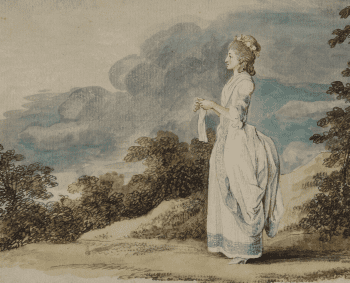
The connection between the art and humanities animates the stories featured in this issue of The Window. Nowhere is this dynamic more evident than in The Mending Sampler, an original song cycle composed by C. Leonard Raybon. Directly inspired by NHC Fellow John Wood Sweet’s award-winning book The Sewing Girl’s Tale, this performance translates the harrowing 1793 story of seamstress Lanah Sawyer and her courageous pursuit of justice into a rich musical landscape of historical narrative, verse, and early American sound traditions. It is a striking testament to how humanities research can give fresh voice to historic struggles for justice and resilience.
At the same time, we remain dedicated to building the bridges that bring this vital scholarship into classrooms nationwide. In these pages, we are also thrilled to introduce our 2026–27 Teacher Advisory Council—a dedicated cohort of K-12 and post secondary educators collaborating with the Center to turn complex research into dynamic, accessible learning tools for students.
Alongside the research featured from some of our current Fellows and news from across our community, these initiatives showcase how the humanities thrive through active engagement, creative interpretation, and shared discovery.
National Arts and Humanities Month serves as a timely reminder that preserving human stories and fostering critical thought require continuous care and collaboration. Thank you for your steadfast support as we work together to keep the arts and humanities vibrant and accessible for all.
Warmly,
Blair LM Kelley, President and Director
National Humanities Center
Threads of Resilience
How a Fellow’s Research on a Dark Episode in Revolutionary America Sparked a New American Song Cycle
When National Humanities Center Fellow John Wood Sweet published The Sewing Girl’s Tale: A Story of Crime and Consequences in Revolutionary America, he brought to light a little-known chapter of American history—one defined by systemic power, remarkable courage, and the quiet resilience of a working-class teenager. Now, his award-winning book has crossed disciplines, inspiring a powerful new musical work that bridges rigorous scholarship and performance art.
On October 27th, the Center is pleased to host a presentation of this piece, an original song cycle composed and curated by Tulane University music professor C. Leonard Raybon, entitled The Mending Sampler. Directly inspired by Sweet’s groundbreaking research into the life of 17-year-old seamstress Lanah Sawyer, the composition translates the emotional and historical weight of Sawyer’s experience as a young seamstress who accused Henry Bedlow, a 26-year-old lawyer, of raping her in 1793.
Rare Courage
At the heart of both Sweet’s book and Raybon’s musical cycle is Sawyer’s unprecedented act of defiance in post-Revolutionary New York. As Sweet writes:
... Lanah Sawyer had a rare kind of courage. Only seventeen, a stepchild in a working family, she was easy to dismiss as a mere “sewing girl.” Yet, when an affluent gentleman showed an interest in her, she dared to imagine that he might really be interested in her. Violently, he dashed that dream—leaving her disoriented, distressed, and unmoored. Then, she gathered her courage and did what no one else in the nation’s biggest city had done in half a century: she charged a gentleman with rape.
Sawyer’s decision to pursue justice against a man from a wealthy family sent shockwaves through early American legal and social structures. John Sweet’s meticulous research painstakingly reconstructed her world, capturing not only the legal battles that followed Sawyer’s accusation, but also the human cost paid by a young woman seeking accountability in a society designed to silence her.
Giving Voice to History
Scored for five voices, piano, and harpsichord, The Mending Sampler weaves together authentic eighteenth-century historical sources, elements of early American musical traditions, and newly written poetry to help translate Lanah Sawyer’s story. The arrangement relies on the contrasting timbres of early and classical instrumentation to reflect both the rigidity of the era’s social hierarchies and the intimate emotional landscapes of those who dared to challenge them.
Rather than focusing solely on the trauma of the crime, The Mending Sampler mirrors the dual themes of Sweet’s scholarship: the struggle for justice and the arduous journey of personal recovery. Through interwoven vocal lines and evocative verse, the piece traces Lanah’s journey from vulnerability and disorientation to resolve, honoring her determination to move beyond the trial and reclaim her life.
Reimagining the Past to Shape the Future
This month’s performance at the National Humanities Center is the latest installment in the Sacred Nine Project, founded by C. Leonard Raybon to research, reconsider, and reimagine historical music, verse, theater, and cultural events from early America. By revisiting historical conflicts and personal stories through dynamic performance, the project aims to foster critical reflection on contemporary society and help shape a more just future.
By transforming Sweet’s historical research into a rich musical performance, The Mending Sampler demonstrates the vital role both the arts and the humanities play in preserving historic voices—and ensuring that stories of courage, like Lanah Sawyer’s, continue to resonate across centuries.
Visit the event page for more details and to register for The Mending Sampler performance on October 27.
NHC Welcomes 2026–27 Teacher Advisory Council
Earlier this year, the National Humanities Center announced the selection of twenty talented educators from across the country for its 2026–27 Teacher Advisory Council, and in late September they came to the Center for three days of orientation and community building.
These exceptional teachers, from schools in 13 states and the District of Columbia, were selected from a highly competitive pool of applicants to work with NHC staff over the coming months to support excellence in humanities teaching at the collegiate and pre-collegiate level.
Since 2016, when the NHC established its Teacher Advisory Council, the Center has relied on the expertise and insight of teachers like these. “The Center’s live webinars, robust primary source collections, and other offerings support teachers from across the country,” said NHC Vice President for Education Programs Mike Williams. “Our teacher advisors help ensure that our classroom tools and professional development experiences are pedagogically sound and relevant across a broad variety of classroom settings.”
“Council members come from a wide array of learning environments, private and public, from communities large and small, and their work with students runs the gamut from middle school to high school and the collegiate level,” said Williams. “Their passion for teaching is infectious, and they have played an integral part in our success over the past decade.”
During their gathering in September, council members met with Center staff to familiarize themselves with the array of NHC educational offerings, plan support activities for the coming year, and share insights about the challenges facing teachers in the present moment. A highlight of their visit was the opportunity to meet and talk with 2025–26 TAC member Mike Burns, who shared his experiences as a council member and talked about the collaborative work he has been doing with other members of the Center’s educator community to address issues surrounding artificial intelligence.
Visit the program page to learn more about the NHC Teacher Advisory Council and meet this year’s members, and see photos from this year’s orientation below.
Featured Research: Points of View
This month, we highlight the research of 2026–27 Fellows whose projects examine how alternative perspectives can spur creativity, reveal hidden histories, and connect realms of thought in unexpected ways.
Alexis Pauline Gumbs
Project: “A Homemade Field of Love: June Jordan and Fannie Lou Hamer Solve the Energy Crisis”
News from the NHC Community
Nicholas Boggs (NHC Fellow, 2024–25) has been awarded the 2026 Christian Gauss prize for an outstanding work of literary scholarship or criticism by the Phi Beta Kappa Society for his fellowship project book, Baldwin: A Love Story.
At its 11th annual gathering, the Haitian International Film Festival honored Marlene Daut (NHC Fellow, 2016–17) with its Haitian Diaspora Award in recognition of her work to preserve Haitian literature and culture.
Hilde Hoogenboom (NHC Fellow, 2000–01) has been awarded the Wayne S. Vucinich Book Prize by the Association for Slavic, East European, and Eurasian Studies for her book, Noble Sentiments and the Rise of Russian Novels: A European Literary History (University of Toronto Press).
Brian Lewis (NHC Fellow, 2022–23) discusses the history of the Luddites in an essay at The Conversation earlier this year.
With collaborators Doris Cheucarama Membache and Chenier Carpio Opua, Julia Velásquez Runk (NHC Fellow, 2018–19) has published an essay about collaboration and resistance among the Wounaan people of Panama and Colombia to the illegal logging of rosewood.
On a recent episode of the Folger Library’s Shakespeare Unlimited podcast, Katherine Vomero Santos (NHC Fellow, 2026–27) appeared with coeditor Katherine Gillen and playwright Andrew Siañez-De La O to discuss their book The Bard in the Borderlands, which explores the possibilities of retelling Shakespeare through the culture, language, and traditions of “la frontera.”
In an article from Harvard Law Today, Ronald Williams II (NHC Fellow, 2025–26) discusses his forthcoming book on Harvard Law School alumnus and TransAfrica Forum founder Randall Robinson. Williams has donated his research materials from the book, including 130 oral history interviews, to the Harvard Law School Library.
Opportunities at the National Humanities Center
2026–27 Undergraduate Humanities Innovators
Application Deadline: October 19, 2026
2027 Being Human Festival (US) Call for Proposals
Application Deadline: October 30, 2026
Your support helps advance research, teaching, and public appreciation for the humanities. Please consider making a gift to the National Humanities Center.
The Window Newsletter
Have concerns or news to share? Please send them to us at nhc-news@nationalhumanitiescenter.org
Subscribe | View In Browser
© 2026 National Humanities Center | 7 T. W. Alexander Drive | Durham, NC 27713 | nationalhumanitiescenter.org
 Built with Shorthand