The Window
News from the National Humanities Center
November 2026
Message from the President and Director
Dear Friends,
The vital work of the humanities is a year-round, collaborative endeavor. At the National Humanities Center, our mission thrives because of an extraordinary, interconnected community—from residential scholars exploring society’s most pressing questions, to K–12 educators bringing the humanities to life in classrooms, to our dedicated institutional partners nationwide.
In that spirit of shared commitment and institutional leadership, I am delighted to welcome Thomas J. Scherer into his new role as chair of our board of trustees. A trustee since 2004, Thomas has served in a variety of leadership positions on our board, most recently as vice chair. His deep institutional knowledge, coupled with his extensive experience as a business and philanthropic leader, makes him uniquely suited to help guide our mission as we continue to expand our national impact.
The stories in this month’s issue of The Window showcase that expanding footprint in action. In our feature on “Impact, Innovation, and Institutional Partners” we highlight how the Center’s influence extends beyond our Research Triangle Park headquarters through the greater NHC community. Whether through our residential fellowship program supporting world-class interdisciplinary research, our education programs equipping teachers across all fifty states with top-tier digital tools, or our public engagement programs to bring scholarly insights directly to local campuses and communities, the Center serves as a dynamic catalyst for the humanities.
This issue also highlights our ongoing partnership with the Stanford Humanities Center. Our virtual “Need to Know: Conversations About Stories That Matter” series draws attention to the groundbreaking work of our Fellows, bringing their scholarship into conversation with the pressing questions and ideas shaping our world today.
None of this work would be possible without the steadfast guidance of our board of trustees and the commitment of our institutional sponsors, donors, and friends. Thank you for partnering with us to champion the humanities and ensure that deep human inquiry continues to inform, challenge, and inspire our society.
Warmly,
Blair LM Kelley, President and Director
National Humanities Center
Impact, Innovation, and Institutional Partners
Surveying the Breadth of the NHC Community
Since its founding in 1978, the National Humanities Center (NHC) has served as an essential hub for advanced study. And while it may be best known for the quiet study spaces of its Research Triangle Park headquarters, the Center’s true footprint extends far beyond its iconic windows and white brick walls.
Today, the Center’s programs actively shape how history, literature, philosophy, and culture are researched, taught, and experienced across the entire nation. By uniting residential scholars, K–12 educators, higher education leaders, and local communities, the Center helps translate rigorous humanities research into innovative and effective classroom teaching as well as more engaged and informed public discourse.
A Refuge for World-Class Scholars: The Fellowship Program
Over the past 48 years, the Center has welcomed 1,644 Fellows advancing humanities knowledge in more than three dozen disciplines and hailing from colleges and universities in 47 US states and 45 foreign countries.
Each year, a diverse cohort of scholars gathers at the Center to consider enduring questions and explore pressing and emerging issues ranging from environmental ethics and artificial intelligence to civil rights history and global literature. The research completed during fellowship years yields hundreds of award-winning books, peer-reviewed articles, and public commentaries that continuously enrich academic curricula and civic discourse nationwide.
Martha M. F. Kelly, vice president for scholarly programs, emphasizes the transformative nature of this residential environment: “We are always thrilled to support the exciting and important work of these scholars. The Center offers scholars both dedicated research time and a vibrant interdisciplinary community, sparking insights that ultimately ripple back to their home campuses and enrich public understanding across the country.”
Elevating the Classroom: Education Programs
The Center’s Education Programs bridge the gap between advanced scholarly research and K–12 and higher education classrooms, equipping teachers across all fifty states with top-tier content and pedagogical tools.
Through live interactive webinars and institutes led by distinguished scholars, thousands of educators gain deep content knowledge and fresh approaches to teaching complex topics each year. Millions of other educators and students utilize the Center’s extensive, high-quality primary source collections and instructional guides developed with the input of scholarly experts and teacher-leaders.
By focusing on professional development and teacher support, the Center achieves a powerful multiplier effect, where one educator’s participation enriches thousands of students over the course of a career.
Helping ensure that the spirit of educational innovation and excellence reaches classrooms across the country, in districts large and small, the Center annually recruits a council of talented teacher advisors who help connect NHC educational resources and opportunities with their teaching networks. Since launching its Teacher Advisory Council in 2016, the Center has welcomed educators from 39 US states who work with students in public and private schools, at community colleges, and at the university level.
Highlighting the vital role of educators in this national network, Mike Williams, vice president for education programs, notes: “There is no one more important in the education field than teachers—they are the ones who sit in front of our students every day. Our goal is to support educators by providing a strong ecosystem of learning, ensuring that our classroom tools and professional development resources directly empower them to thrive in their classrooms.”
Bringing Research to Communities: The Being Human Festival
Beyond academic institutions and classrooms, the National Humanities Center coordinates the US edition of the Being Human Festival, a nationwide celebration that demonstrates the vitality and relevance of humanities research in everyday life.
Launched in the US in 2024, the festival supports local cultural organizations, universities, and community centers staging interactive events, workshops, guided tours, and artistic performances. In its first three years, the US festival has included 79 events in 21 states.
The festival bypasses traditional academic formats in favor of accessible public engagement, including community storytelling, tactile art interventions, local history walks, and culinary pop-ups. By backing regional organizers with strategic support, the Center empowers local leaders to highlight how humanities work addresses place-based memory, civic identity, and human connection.
Jacqueline Kellish, vice president for public engagement, highlights the festival’s capacity to connect broad audiences with humanistic inquiry: “Being Human allows us to share the intellectually rich work of humanities researchers directly with local communities. It breaks down traditional walls and demonstrates how the humanities help us all navigate the complexities of our shared human experience.”
Fueling the Mission Through Institutional Sponsorship
Behind the National Humanities Center’s expansive national footprint lies a vital network of academic allies through the Institutional Sponsorship Program. Comprising dozens of leading colleges and universities across the country—ranging from major research universities to prominent liberal arts colleges—these institutional sponsors serve as the bedrock of the Center’s national community.
The Institutional Sponsorship Program establishes a formal partnership between higher education institutions and the Center. Sponsoring institutions commit annual financial support that helps sustain fellowship endowments, education initiatives, and public outreach. In return, the Center provides tailored faculty development opportunities, institutional recognition, specialized seminars for emerging scholars, and direct pathways for faculty engagement.
This collaborative model creates a mutually beneficial ecosystem across higher education. Faculty members at sponsoring institutions receive priority guidance and visibility when applying for competitive residential and virtual fellowships, while graduate and undergraduate students gain access to specialized summer institutes in digital and public humanities. Furthermore, university education departments benefit from direct integration into the Center’s national educator network. At a moment when higher education faces evolving societal challenges, the Institutional Sponsorship Program provides partner campuses with a high-visibility platform to champion the value of liberal arts and humanistic inquiry, ensuring that campus-based research actively informs and inspires the broader public.In
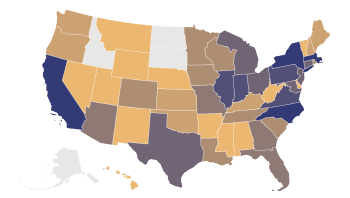
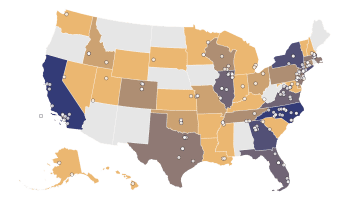
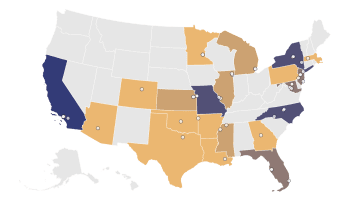
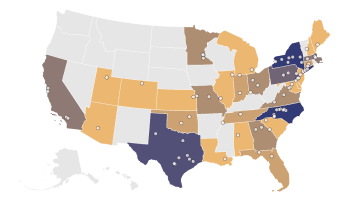
The Greater NHC Community Across the US
The interactive maps below highlight the geographic breadth of the Center’s community. Click on the states and data points to see where NHC Fellows, teacher advisors, public engagement activities, and institutional sponsors can be found.
Rethinking North American History
How do our traditional historical frameworks shift when we center a thousand years of Indigenous power, governance, and diplomatic adaptation?
On Monday, November 9, 2026 (1:30–3:00 p.m. ET), the National Humanities Center (NHC) and the Stanford Humanities Center (SHC) present the second installment of their series “Need to Know: Conversations That Matter.” This online public dialogue features two-time NHC Fellow Kathleen DuVal (University of North Carolina at Chapel Hill) in conversation with SHC Fellow Brian DeLay (University of California, Berkeley).
Kathleen DuVal and Brian DeLay
Kathleen DuVal and Brian DeLay
DuVal’s groundbreaking book, Native Nations: A Millennium in North America, recenters North American history around the complex, egalitarian societies and sophisticated economies that Indigenous peoples developed long before European arrival. Honored as the only work to win the Bancroft Prize, the Cundill History Prize, the Mark Lynton Prize, and the Pulitzer Prize in History, the book directly challenges centuries of persistent misconceptions regarding Native sovereignty.
Joined by DeLay—an authority on nineteenth-century geopolitics, arms trade, and borderlands—the conversation promises an essential examination of how Native power has evolved, adapted, and endured into the modern era.
About the “Need to Know” Series
Presented in partnership by the National Humanities Center and the Stanford Humanities Center, the “Need to Know: Conversations About Stories That Matter” series brings together distinguished scholars and award-winning authors from two of the nation's premier research institutions.
Designed to look beyond daily headlines, these virtual dialogues elevate the urgent stories shaping our understanding of the past and present. By pairing Fellows from both Centers, the series highlights ground-breaking humanities research and brings vital scholarly insights directly to educators, academics, and the broader public.
Featured Research: Colonialism and its Aftermaths
How have colonial and post-colonial subjects created community, organized resistance, and preserved Indigenous culture and values in disparate places across the world?
Kevin Escudero
Project: “Imperial Unsettling: Indigenous and Immigrant Activism toward Collective Liberation”
Olabode Ibironke
Project: “The Republic of Laughter: Television and the Affective Archives of Postcolonial Nigeria”
News from the NHC Community
Thomas J. Scherer Elected Chair of NHC Board of Trustees
The National Humanities Center (NHC) is pleased to announce that Thomas J. Scherer has been elected chair of its board of trustees.
Scherer has been a trustee of the Center since 2004 and is a longstanding member of the board’s executive committee. For the past two years, he has served as vice chair. In addition to his work on behalf of the NHC, Scherer has been an active donor and philanthropic advocate for a variety of organizations, including the Royal Shakespeare Company, Equal Justice Works, and The Actors Center NYC.
“Thomas Scherer has been a steadfast champion of the National Humanities Center and its vision for championing humanities scholarship,” said Dr. Blair LM Kelley, president and director of the Center. “His deep institutional commitment, coupled with an exceptional legal career and commitment to humanistic inquiry, makes him uniquely suited to guide our board.”
Scherer has led a distinguished corporate legal career, most recently as General Counsel at Aegon Asset Management. Prior to joining Aegon Asset Management in 2018, he held senior legal positions at AIG and Swiss Re. Earlier in his career, he served as a managing director at Morgan Stanley, and began his private legal practice as an associate at Cravath, Swaine & Moore LLP.
Before entering corporate law, Scherer served as a captain in the US Army from 1984 to 1988.
Scherer earned his Bachelor of Arts in English Literature from Princeton University before completing his Juris Doctor at Columbia University School of Law. His humanities education at Princeton laid the groundwork for a lifelong commitment to supporting higher education and humanistic study.
“It is an extraordinary honor to be elected chair of the board of trustees at the National Humanities Center,” said Scherer. “For nearly five decades, the Center has stood as an essential sanctuary for independent thought, critical research, and creative exploration. I look forward to working closely with Dr. Kelley, our fellow trustees, and the entire NHC community as we continue to build on the Center’s remarkable legacy.”
Ana Mariella Bacigalupo (NHC Fellow, 2009–10; 2023–24) and Juan Junior Prado have coproduced and codirected When the Waters Roar, a short community documentary that uses contemporary Moche and Chimu indigenous storytelling to reflect on the El Niño phenomenon, climate change, and the importance of indigenous knowledge in dealing with floods on the northern Peruvian coast.
The catalog for the Folger Shakespeare Library’s new exhibit, To Hear Her Speak: Black Women and Shakespeare, features essays from three NHC Fellows: Kim F. Hall (2016–17), Patricia A. Matthew (2022–23), and Kathryn Vomero Santos (2026–27). Curated by Folger Institute director Patricia Akhimie, the exhibit runs through May 2, 2027.
Cassie Owens Moore (Teacher Advisory Council, 2025–26) has been selected for a Fulbright Teacher Exchange Award. Earlier this year, she was named South Carolina School Librarian of the Year.
Frank Shovlin (NHC Fellow, 2024–25) recently reflected on his experience writing a biography of enigmatic Irish writer John McGahern for The Irish Times.
This fall, the Gulbenkian Institute for Advanced Study in Lisbon welcomed its first class of fellows. The Institute is led by Miguel Tamen (NHC Fellow, 2010–11). NHC Fellows Lorraine Daston (2021–22) and Caroline A. Jones (2017–23) serve on the Institute’s Advisory Board.
Opportunities at the National Humanities Center
Your support helps advance research, teaching, and public appreciation for the humanities. Please consider making a gift to the National Humanities Center.
The Window Newsletter
Have concerns or news to share? Please send them to us at nhc-news@nationalhumanitiescenter.org
Subscribe | View In Browser
© 2026 National Humanities Center | 7 T. W. Alexander Drive | Durham, NC 27713 | nationalhumanitiescenter.org
 Built with Shorthand