
Humanities in the Age of Change
National Humanities Center
Impact Report 2025
The National Humanities Center provides scholars with the resources necessary to generate new knowledge, strengthens teaching on the collegiate and pre-collegiate levels, and promotes understanding of the humanities and their foundational role in a democratic society.
The President’s Message
I began as President and Director of the National Humanities Center in the summer of 2025, at the precipice of an extraordinary juncture between the Center’s prestigious past and promising future as we approach the Center’s semicentennial in 2028. As a historian and Fellow (2022–23), I understand the crucial role that the Center plays in shaping hope, building community, and providing resources for scholars inside the academy.
At a time of challenge and transition for the humanities, the purpose for this institution is clear. As the only private, endowment-based nonprofit organization in the world focused exclusively on advanced studies of the humanities, the National Humanities Center is uniquely equipped to serve as a bridge in this moment. The sunlit space, library resources, and engaging community reflect the nature of our work and inspire our vision of the future.
We are Supporting Strong Fellowship, Building the Humanities for the Future, Connecting with Communities, and Embracing Legacy and Leadership to better understand and address human complexity and change in our world.
Supporting Strong Fellowship
Best known for our Residential Fellowship program, the Center hosts more than 30 faculty and independent scholars from across the nation and around the world each year. The NHC provides private office space, library services that include research and technical support, and professional development along with the invitation to participate each day in a collective lunch hour. Since 1978, we have served 1,628 scholars who have produced over 1,780 volumes as well as countless essays, articles, and other works.
Pulitzer Prize-winning historian Kathleen DuVal (NHC Fellow, 2008–09; 2025–26) exemplifies the caliber of our scholars. I had the pleasure of interviewing Kathleen at the Center, and I hope you will enjoy an excerpt from our conversation about her groundbreaking book and the influence of the classroom in her writing. I am also excited to introduce you to our inaugural Presidential Scholar in Residence, Ben Vinson III, a leader in our community.
To expand our community and make resources available to more scholars, the NHC has added three innovations in 2025: the Scholars at Work Webinar Series, a curated lineup of professional development sessions designed to support humanities scholars; the Scholarly Writing Institute, an intensive nine–day workshop that provides dedicated writing time, as well as expert guidance in writing and publishing to advance scholarly projects; and the Literary Arts and Research Initiative to integrate more creative researchers into our programs.
Building Humanities for the Future
The Teacher Advisory Council (TAC) and the National Humanities Leadership Council (NHLC), a program for emerging scholars, highlight the Center’s innovative programs to construct a sustainable pipeline of teachers and scholars for the future. These classroom teachers and university students are leaders who value humanistic fields of study and their utility in meeting society’s contemporary challenges.
For K–12 teachers, we serve as a conduit to build both virtual and real life opportunities for creativity and collaboration, providing the pathways for new knowledge and crafting networks of connection and support. TAC leaders Matt Hicks and Claudine James share their stories from private and public school classrooms in Missouri and Arkansas. Hicks also describes his participation in the Artificial Intelligence and Digital Literacy (AIDL) Summit and AIDL Institute, which provided hands-on learning experience and resources to navigate artificial intelligence in the classroom. Emerging scholars Trisha Santanam (Duke University) and Pablo Ávila (University of Memphis) provide insights about their research projects and opportunities on the NHLC. These visionary undergraduates are the scholars of the future.
Connecting with Communities
Be it a book talk on our campus in North Carolina, a scholarly conversation at a Midwest college, or a humanities festival in the Deep South, we value partnerships and community. Our events in 2025 included In Conversation: How to Disagree Agreeably, a timely discussion in Kansas City between scholars Cornel West and Robert P. George. Here at the Center, Martha S. Jones (NHC Fellow, 2013–14) discussed her new book, The Trouble of Color: An American Family Memoir, with Tressie McMillan Cottom (NHC Fellow, 2025–26). And on a national level, the American iteration of the globally interconnected Being Human Festival continues to exemplify the ways we connect scholarship directly to communities to meet today’s challenges.
Embracing Legacy and Leadership
Through the years, our donors and their families have made lasting commitments to the National Humanities Center. We will share some of their reflections on contributing to a legacy that builds the future.
Of course, we could not do our work without the support of the Center’s dedicated Board of Trustees. Please join me in welcoming our newest Board member, James Rhee, and congratulating our new Board Chair, Rishi Jaitly. This report concludes with a note from Rishi explaining why the National Humanities Center’s unique role in the nation and the world has grown more indispensable than ever. Our path to the future requires resolute determination to support and strengthen the fields that sustain us all.
Warmly,
Blair LM Kelley
President and Director
National Humanities Center
Supporting Strong Fellowship
Humanities research impacts every facet of our lives, and it will shape the future.
In a time of unpredictable change, the National Humanities Center supports greater understanding of the human experience by providing scholars with an environment conducive to generating new knowledge, connecting communities through enriching programs and events, and providing educators and emerging scholars with classroom tools and leadership opportunities. From navigating the benefits and harms of artificial intelligence in the classroom, to uplifting the value of humanities and civil discourse in society, our work sustains the future.
The stories presented in this impact report, including an interview with Pulitzer Prize-winning historian Kathleen DuVal (NHC Fellow, 2008–09; 2025–26), demonstrate not only the high level at which we fulfill our mission, but also the way the Center is innovating to expand our reach and impact now and in the future.
1628
Number of residential NHC Fellows since 1978
1783
Number of volumes produced by NHC Fellows
33
Average number of yearly residential NHC Fellows
Embracing Curiosity and Inspiring Courage
“I could almost say this about my whole career: it’s impossible without being in the classroom.”
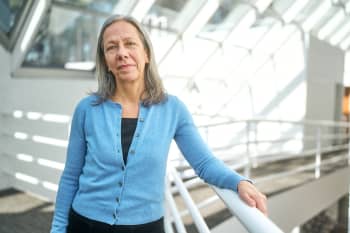
An impromptu conversation between prize-winning historians as they grab lunch or coffee in the National Humanities Center’s sunlit atrium is not unusual. Such encounters are what make the NHC a unique incubator for sparking ideas and creating community. What began as an informal chat progressed to an interview between NHC President Blair LM Kelley and NHC Fellow Kathleen DuVal, whose book Native Nations: A Millennium in North America won the Pulitzer Prize in History in 2025, as well as the Bancroft Prize, the Cundill History Prize, and the Mark Lynton Prize. This unprecedented achievement demonstrates the robust scholarly rigor Fellows bring to and share with the National Humanities Center.
In her 2025 Native Nations, DuVal tells the story of Native Peoples “adapting to change in the Americas for at least 20,000 years and counting.” She wants readers to know there is more to Native American history than limited ideas of Indian removal and traumatic boarding schools. In this interview, DuVal, a Guggenheim Fellow and a two-time NHC Fellow (2025–26; 2008–09), talks about what she describes as the complicated and beautiful history of Native people who continue to adjust and adapt to change. DuVal also shares how the university classroom at the University of North Carolina at Chapel Hill and its students influence her work. This excerpt shares a small portion of their conversation about DuVal’s work, her inspiration in the classroom, and the motivation to keep pressing for more voices, information, and understanding.
Summer Programs for Scholars
Although the Residential Fellowship is the National Humanities Center’s flagship program and any scholar’s dream, for some people the year-round timetable does not fit their personal or professional circumstances.
To make its amazing resources—engaging community, peaceful spaces, professional development opportunities, and extensive library services—available to more people, the Center developed a summer offering for faculty from sponsoring institutions.
In addition to the Select Summer Residency Program, faculty from sponsoring institutions now also have the opportunity to join the Summer Writing Institute. Although both summer programs feature more intense timeframes, they are just the right fit for some scholars’ schedules.
Select Summer Residency Program
Four Weeks in June
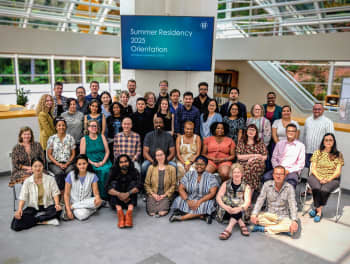
Forty-two scholars, selected and sponsored by 34 institutions, attended the June 2025 Select Summer Residency Program. The four-week residency allows scholars to jump start or make progress on a project. Scholars reside at a nearby hotel and join their cohort for breakfast and lunch in the Center’s Commons.
In this popular program, summer residents are humanities scholars, or scholars in other disciplines who are working on a humanities project. Applicants must have completed a PhD or the equivalent for fields in which a terminal Master’s degree is standard. Residents experience a concentrated period of supported research and intellectual exchange onsite at the National Humanities Center. Summer residents also benefit from professional development, including sessions with a writing coach, copyright expert, and academic press directors.
Scholarly Writing Institute
Nine Days in July
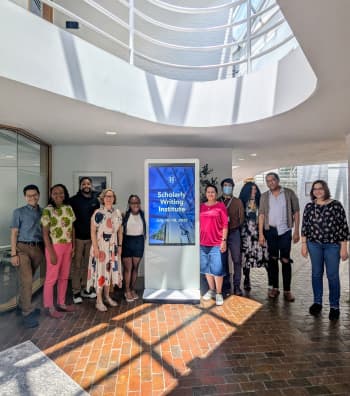
The NHC piloted its first Scholarly Writing Institute (SWI) in July 2025. Ten scholars from nine institutions attended this inaugural nine-day program. According to the first group of scholars, the institute was a huge success. SWI participant Amy Frishkey quickly felt at home within a community of scholars and writers. “Writing can be a very solitary act and especially with a very specialized project,” said Frishkey. “Having the memory of being here, being in community, being in a space with light and solace when you want it… I will carry this memory of repose with me to help me stay connected to why I do what I do.”
The short-term, highly intensive program featured writing time in studies, as well as sessions with a professional writing coach and university press editors, in special partnership with UNC Press and Duke University Press. “This program provides a way for selected scholars to be outside of their regular day-to-day routine and really be able to focus on and hone what they are doing, while in conversation with other people who are engaged in similar work,” said Martha Kelly, vice president for scholarly programs.
The 2025 pilot was so successful that the 2026 Scholarly Writing Institute will accept 20 scholars, doubling the number of slots from last year’s intensive experience.
Literary Arts and Research Initiative
Supporting Creative Forms of Research
Their work may look different, but researchers who take a more creative approach contribute important scholarly work with all of the rigor of more conventional scholars. “Many creative writers and artists do incredible research as part of their process, and that research is often not recognized as scholarly research because the outcomes are not conventional scholarly outcomes,” says Martha Kelly, vice president for scholarly programs. Because creative researchers generate valuable knowledge and open new ways of thinking, Kelly began looking for new ways to “integrate more artistic scholars into the Center’s programs as a way to foster greater engagement with the arts.”
The Hawthornden Foundation awarded the NHC $30,000 to form a working group for a Literary Arts and Research Initiative. The one-year initiative is helping Center staff visualize ways to incorporate creative writers who bring something different to the table.
“We’ve always had scholars who were also creative writers, but for the residential fellowship, we don’t generally support creative projects unless they’re nonfiction,” said Kelly. “We brought together a star-studded group of authors for the working group.” Those authors include Booker Prize winner Marlon James, NHC Fellows Meta DuEwa Jones (2018–19) and Nell Irvin Painter (1978–79), National Book Award winner Imani Perry, and Pulitzer Prize-winning author Ilyon Woo.
The initiative is co-led by Kelly and two award-winning authors and past NHC Fellows, Nicholas Boggs (2024–25) and Alexis Pauline Gumbs (2020–21).
Building Humanities for the Future
The National Humanities Center’s Education Programs build bridges between the academic world and the working classroom. By offering resources and professional development experiences, we help educators from grade school to higher education enhance their teaching skills and content knowledge.
Our Teacher Advisory Council (TAC) members help us to develop, evaluate, and promote the National Humanities Center’s educational materials and projects. Our webinars and institutes are designed to help educators at every level enhance their skills. In college and university campuses nationwide, the next generation of scholars are emerging in the humanities.
The National Humanities Center’s division of Public Engagement has established a National Humanities Leadership Council (NHLC) to help prepare a select group of students with humanities-based leadership skills. These emerging scholars participate in a unique series of roundtables and discussion sessions with scholars and leaders from across the country, addressing the concerns of contemporary society. From campuses and hallways across the nation, meet the teachers and students who are part of our growing community.
84k
Hours of continuing education credit earned by NHC education webinar attendees in 2024–25
34
Undergraduate leaders participated in the 2024–25 NHLC
26
Colleges and universities represented on the 2024–25 NHLC
21
Colleges and universities from across the US represented on the 2024–25 NHLC
94
Educators and graduate students participated in intensive, in-person NHC institutes in 2025
2
Artificial Intelligence & Digital Learning Summits led in Summer 2025
Being That Teacher
Claudine James
Seventh-Grade English Teacher
NHC Teacher Advisory Council
Rare snow days in Malvern, Arkansas kept English teacher Claudine James and her seventh-grade students home in late January 2026, and Ms. James was not happy about missing days in the classroom. “I tell students all the time, ‘That’s my happy place, and I’m the Oprah of my classroom,’” said James. “I can make or break a student’s life by the words I say, by the encouragement I give them, and by the knowledge I share with them. There’s just too much going on not to be there.”
She tried another professional field after college, but the course of history brought James to her career in the classroom, at the same middle school she attended. She admired the women in her family who taught during the Jim Crow era, a time when teaching provided one of the few professions that welcomed Black women. “They served in the vanguard who uplifted their communities through education,” James says. “All of the professional women that were in my family, my aunts and my great aunts, they were all educators. I think that’s what I saw, and that’s what I wanted to be. I do believe that it was my chosen profession, because I absolutely love teaching.”
James uses love for her students to connect with them. “I try to treat my students as if they were my own children. There’s a story I tell every year on the first day of school. I show a picture of my own sons, which I’m the proud mom of three sons, all college graduates, all professionals. I tell my students, ‘I don’t see my sons every day, but I see you every day. I’m going to develop a love for you. If it’s me giving you something a little harder or something that pushes you, it’s because I see the best in you.’”
Lighting the Flame
Matt Hicks
High School English & Language Arts Teacher
NHC Teacher Advisory Council
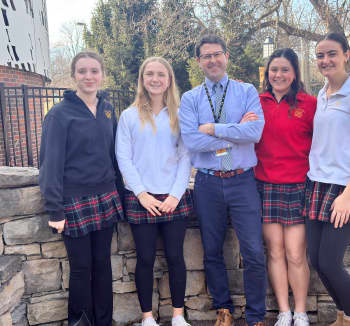
Myra H. admits she became more than a little nervous last year during her sophomore World Literature class at St. Teresa’s Academy (STA), a private, all-girls Catholic school in Kansas City, Missouri. Her teacher Matt Hicks tasked Myra and her classmates with an assignment beyond their comfort zone. “At first when he started explaining it, I was like, ‘This is going to be really difficult‘,” recalled Myra. “And it was really difficult. He was like, ‘Look, you’re going to get out of this what you put into it.’” Hicks charged his students with identifying a problem, exploring it from different angles, and producing a podcast to present one solution–conceding nothing is perfect–as better than others. He crafted the assignment in part from a National Humanities Center webinar class for educators.
Currently in his twenty-fourth year of teaching, Hicks wants to light a fire within his students, a fire for knowledge and for bettering humanity and themselves. A teacher passed on the education spark to Hicks when he was 14 years old. He was attending Saint Louis University High School, an all-boys Jesuit high school, with no plans to be an educator. “I remember my freshman English teacher,” said Hicks. “His name was Father Richard Hadel. He said, ‘What do you want to be when you grow up?’ And I said, ‘I want to be rich.’ He chuckled and said, ‘I think you’d be a really good English teacher.’”
An Unconventional but Distinctly Human Path
Pablo Ávila
University of Memphis
NHC National Humanities Leadership Council
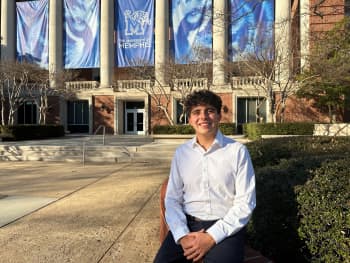
Emerging Scholar Pablo Ávila follows his own path, and his path to higher education looks different from his classmates at the University of Memphis. Born and raised in Bogotá, Colombia, Ávila debated between pursuing studies in engineering or in the music business. Experiences from his childhood pulled him in a different direction. “In high school, elementary, and middle school, we did a lot of service trips and service projects around Colombia,” said Ávila. “We would visit different communities. Most of them were very impoverished, and we would partner with different schools, rehab centers, or orphanages. We would teach them English, teach them music, be with the kids, provide activities for the kids. I just really loved that. That was one of my biggest highlights from school.”
After graduating from high school, Ávila decided to do similar work abroad in Mexico. “That program was a year of helping and serving the different communities across the country. We helped build different houses and community centers. We taught English language courses and music in orphanages and rehab centers. I was also the lead translator between the Spanish-speaking community and our team, which was mostly English-speaking. I helped with most of the translating and communicating the needs and the wants of the community to our team, then discussed the needs with the leadership to see how we could best serve them.”
Hitting All the Right Notes
Trisha Santanam
Duke University
NHC National Humanities Leadership Council
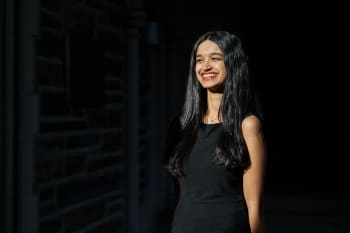
Duke University senior Trisha Santanam serves on the Center’s National Humanities Leadership Council. A Mellon Mays Undergraduate Fellow and a Duke Trinity Scholar, Santanam majors in English and minors in Music. She examines how music allows people to “hear diaspora and discern a sense of home.” She is also part of Duke’s Archives and Creative Process Bass Connections team, and she works in the Editorial, Design, and Production department at Duke University Press. In this interview with the National Humanities Center, Santanam talks about internalizing the influence of her humanities professors, working with the Center to create a literary conference for local universities, and carrying on the legacy of higher education research and teaching.
NHC: You have said in a previous interview that you’re “interested in what music does and not just what it says.” Would you elaborate on that idea?
Trisha Santanam: My mother and grandmother raised me by telling stories about India in the form of songs. The songs were about women who gave food to lost travelers despite the hunger stirring in their own bellies—stories about children who left home and returned years later. Too young to grasp the weight of their voices, I only knew that the songs took me back to a version of India that lingered so frequently and abstractly in my mind. I became obsessed with music because of how it seemed to evade all description: what I felt when listening to a song could never be precisely translated, and I understood that there was something mysterious occurring that could only be experienced rather than explained.
AI: Conundrum or Creator for the Classroom?
Matt Hicks and his high school students in Missouri are not alone in examining and contemplating the role and impact of artificial intelligence (AI) in the classroom and society. Educators from kindergarten to higher education are struggling with AI, learning how to take advantage of its benefits while simultaneously recognizing AI’s threat to students’ abilities to think and collaborate with other humans. In a June 2025 poll taken by the Pew Research Center, 53% of US respondents said AI will lessen people’s ability to think creatively. Only 16% believed AI would improve creative thinking. More respondents than not also believe AI will make problem-solving worse and reduce people’s ability to form meaningful relationships.
The National Humanities Center is working with educators to understand AI’s limitations, ethical harms, and potential uses for learning, access, and equity. With the support of Consumer Affairs in Tulsa, Oklahoma, the Center organized two Artificial Intelligence and Digital Literacy (AIDL) offerings for educators in 2024 and 2025. The first, AIDL: Toward an Inclusive Practice Teachers’ Summit, was followed by AIDL: Toward an Inclusive and Empowering Teaching Practice Institute.
The AIDL program offered resources to navigate the pedagogical challenges and opportunities posed by artificial intelligence in the classroom. Scholars in artificial intelligence, digital literacy, and the humanities immersed teachers in hands-on learning experiences. The summit presented best practices for redesigning classroom instruction and online education resources for use by instructors at all levels. In the 2025 AIDL Institute, attendees explored how to teach writing, research, and critical inquiry in the face of developing generative AI technology.
Designed for US secondary school, community college, and college humanities educators, this program placed teachers in conversation with top scholars who work on AI and critical digital literacy. Participants gained experience with tools to design assignments, exercises, and policies for their classrooms, departments, schools, or districts.
The 2025 institute was developed by University of Kansas Department of English professors Katie Conrad and Sean Kamperman in partnership with the National Humanities Center and the Hall Center for the Humanities. It was generously underwritten by Cindy Reiss-Clark, the J. Wayne and Elsie M. Gunn Center for the Study of Science Fiction, The University of Kansas Department of English, and the William T. Kemper Foundation–Commerce Bank, Trustee.
Connecting in Communities
We are part of the community, and the Center actively engages with communities across the nation through a variety of events and programs.
The National Humanities Center presents conversations between some of the world’s most renowned public intellectuals, such as Cornel West and Robert P. George.
NHC Vice President for Public Engagement Jacqueline Kellish serves as director of the American iteration of the Being Human Festival, a global celebration of the humanities. Now in its third year in the United States, the festival brings scholars, artists, curators, community organizers, and humanities practitioners of all types together to make humanistic exploration a joyful, collaborative experience.
Along with our NHC Fellows, scholars in our summer programs, and students and teachers who collaborate with the Center, we all depend on community for greater understanding. Here are a few of the events that brought people and their ideas together in 2025.
Events and Partnerships
NHC Fellows Tressie McMillan Cottom (2025–26) and Martha S. Jones (2013–14). Photo: Joel Elliott
NHC Fellows Tressie McMillan Cottom (2025–26) and Martha S. Jones (2013–14). Photo: Joel Elliott
Fellows’ Discussion: The Trouble of Color
Writer, historian, and public intellectual Martha S. Jones (NHC Fellow, 2013–14) discussed her book, The Trouble of Color, with sociologist, author, and New York Times columnist Tressie McMillan Cottom (NHC Fellow, 2025–26). The event was organized in collaboration with the Center for the Study of the American South, UNC’s Sonya Haynes Stone Center for Research in Black Culture and History, and the Department of African, African American, and Diaspora Studies.
Legal scholar Robert P. George, journalist and moderator Jane Ferguson, and philosopher Cornel West. Photo: Jack Kapple
Legal scholar Robert P. George, journalist and moderator Jane Ferguson, and philosopher Cornel West. Photo: Jack Kapple
In Conversation: How to Disagree Agreeably
Noted philosophy scholar Cornel West engaged legal scholar Robert P. George in a structured conversation moderated by renowned journalist Jane Ferguson about ways to find common ground and disagree without division. Held in Kansas City, this event was produced in partnership with American Public Square and the National WWI Museum and Memorial.
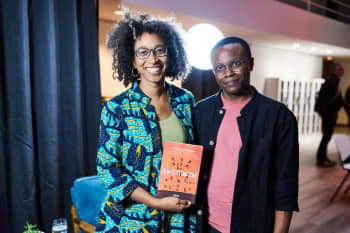
Alexis Pauline Gumbs (NHC Fellow, 2020–21) with Cameron Awkward-Rich. Photo: Matt Ramey
Alexis Pauline Gumbs (NHC Fellow, 2020–21) with Cameron Awkward-Rich. Photo: Matt Ramey
An Optimism: Poetry Reading and Dialogue
Poet and scholar Cameron Awkward-Rich read from his new volume of poetry, An Optimism (Persea Books, October 2025), and was joined in conversation by author and scholar Alexis Pauline Gumbs (NHC Fellow, 2020–21). This event was held at the National Humanities Center, and co-organized with the Pauli Murray Center for History and Social Justice in Durham.
Being Human is Being in Community
A Festival for Everyone, Everywhere
The Being Human Festival, which originated in the United Kingdom in 2014, marks its third year in the US in 2026. A national festival of the humanities, Being Human brings together local artists, scholars, and educators who present an array of free, community-focused events across the country. Together, these people and events demonstrate how the humanities add depth and meaning to our lives, help us understand ourselves and one another, and provide context for the complex world around us. Being Human encourages humanities practitioners to share their research with non-specialist audiences in creative, accessible, and dynamic ways. In the process, festival participants—from curious children to seasoned museum professionals—have the opportunity to pose and answer meaningful questions about our shared human experience through literature, history, philosophy, art, and cultural heritage.
During the first two years of the US festival (2024–25), 44 groups organized 56 events across the country. More than 1,500 people engaged in community-based activities. Events included a program introducing Coloradans to histories and culinary traditions of Vietnam, and a trivia-style game investigating the impact of folklore on environmental beliefs in Florida. The festival also highlighted essential narratives of immigration through a storytelling and mural project based in New York that crossed cultural and national borders. North Carolinians had the chance to bring the environmental humanities to life through nature treks organized at the intersection of wildlife preserves and urban development.
“Events and programs like these encourage us to cultivate curiosity, embark on collective missions of discovery, and celebrate the wonder and complexity of our shared human journeys,” said Jacqueline Kellish, director of the US festival and the NHC’s vice president for public engagement. “Being Human and other public humanities initiatives help us to make sense of the world around us, to understand legacies of the past, and to imagine a more just future.”
The 2026 Being Human Festival (US) was organized around the theme “Between the Lines”—a space of hidden histories, shifting borders, and unspoken meanings. Researchers and practitioners explored boundaries, crossings, and intersections—and the spaces in between, where meaning is made and remade.
Embracing Legacy and Leadership
The National Humanities Center is a private, nonprofit organization and is sincerely grateful for the support of individuals, foundations, corporations, and institutional sponsors—universities and academic organizations whose partnerships specifically support the Center’s fellowship program and public outreach efforts.
The Center is also sustained in part by a permanent endowment, valued at $93.2 million on June 30, 2025, that provided expendable income covering approximately 63% of its annual operating costs. In addition to the donors noted here, the Center recognizes with appreciation Duke University, North Carolina State University, and the University of North Carolina at Chapel Hill for their library and technical assistance.
In 2025, the NHC Board of Trustees welcomed new board member James Rhee and new board chair Rishi Jaitly. The Center combines visionary leadership with a strong legacy of support from donors such as the Porter, Goheen, and Birkelund families. With our newest NHC leaders and our historical connections with generous donors who advocate for the humanities, we are bolstered to meet our mission.
The Legacy of the Birkelund Lounge and Goheen Collection
In the summer of 2025, the Center underwent major renovations to update the John P. Birkelund Lounge and replace the shelves housing the Robert F. and Margaret S. Goheen Collection of books by Fellows.
These efforts opened up and refreshed one of the Center’s most beautiful spaces, expanding the capacity for both casual and public gatherings, where visitors can not only socialize but peruse the work of NHC Fellows from the past half-century.
Lead gifts for these renovations were provided by the Birkelund and Goheen families, in memory of their parents. One of the Center’s founders, Robert Goheen, was a trustee of the Center from 1984 until 1996, serving as chair from 1991 until 1996. He was succeeded as chair by financier John Birkelund, who helped lead the Center through an important era of growth, including the creation of more than a dozen endowed fellowships.

National Humanities Center Board of Trustees
* NHC Fellow
• David Blackbourn, Cornelius Vanderbilt Distinguished Chair of History, Vanderbilt University
• Daniela Bleichmar, Professor of Art History and History, University of Southern California
• Dennis M. Campbell, Headmaster Emeritus, Woodberry Forest School
• Willo Carey, Former Broadcast Executive, WHYY
• William D. Cohan, Author and Journalist; Special Correspondent, Vanity Fair
• Joy Connolly, President, American Council of Learned Societies
• Margo Drakos, Managing Director, DRK Foundation
• David Folkenflik, Media Correspondent, National Public Radio
• Rishi Jaitly (Chair), Senior Advisor, OpenAI; Founder, Virginia Tech Institute for Leadership in Technology
• William C. Jordan, Dayton-Stockton Professor of History, Princeton University
• Blair LM Kelley*, President and Director, National Humanities Center
• Karen R. Lawrence (Secretary), President, The Huntington Library, Art Collections, and Botanical Gardens
• Vincent LoVoi (Treasurer), Managing Partner, Mimosa Tree Capital Partners
• Jane O. Newman*, Professor of Comparative Literature, University of California at Irvine
• Vincent E. Price, President, Duke University
• Carol Quillen, President, National Trust for Historic Preservation
• James Rhee, Owner and Author, red helicopter; Howard University Johnson Chair of Entrepreneurship; MIT Sloan Senior Lecturer
• Harriet Ritvo*, Arthur J. Conner Professor of History, Massachusetts Institute of Technology
• Peter J. Rogers Jr., Board Chairman and CEO, B4Checkin Ltd.
• Ann Wierda Rowland*, Associate Professor of English, University of Kansas
• Thomas J. Scherer (Vice Chair), General Counsel, Aegon Asset Management
• Lisa Schroeder, President, The Pittsburgh Foundation
• John Sherer, Spangler Family Director, UNC Press
• Joan Hinde Stewart*, President Emerita, Hamilton College
• Héctor Tobar, Professor of Chicano/Latino Studies, English, and Literary Journalism, University of California at Irvine
• Ben Vinson III*, Past President, Howard University
• Raymond J. Wiacek, Partner, Jones Day
• Yolonda Y. Wilson*, Associate Professor of Health Care Ethics, Philosophy, and African American Studies, St. Louis University
• Michael Witmore, Consultant, Director Emeritus of Folger Shakespeare Library
Photography: Matt Ramey
Photography: Matt Ramey
Emeritus Trustees
John F. Adams
James H. Averill
Elizabeth Birkelund
Caroline Walker Bynum
W. Robert Connor
Andrew Delbanco*
Blair Effron
Frances Ferguson*
Frances Daly Fergusson
Catherine Gallagher*
Geoffrey Harpham
Michael Ann Holly
Philip S. Khoury
Shepard Krech III*
Thomas W. Laqueur*
Richard Levy
William M. (Bill) Moore Jr.
Patricia R. Morton
Robert D. Newman
Francis Oakley*
John C. O’Hara Jr.
Carl Pforzheimer III
Lawrence R. Ricciardi
Cara W. Robertson*
Sally Dalton Robinson
Joshua Ruch Benno Schmidt Jr.
Isaac Shapiro, Esq.
Patricia Meyer Spacks*
Robert Strassler
Mark E. Thierfelder
Jonathan G. Weiss
A. Morris Williams Jr.
Herbert Winokur Jr.
Pauline R. Yu
Welcoming James Rhee to the NHC Board of Trustees
“James’s remarkable ability to integrate deeply humanistic principles with astute business acumen aligns perfectly with the Center's mission.”
The National Humanities Center is excited to welcome our newest board of trustees member, James Rhee. A world-renowned business leader, gifted educator, and creator, Rhee centers his approach to leadership on a deeply human and dynamic definition of agency. His innovative outlook is detailed in his best-selling book, red helicopter: a parable for our times. In red helicopter, Rhee articulates a philosophy and an operating system that make tangible the critical role of trust, dignity, and systems thinking in designing and fostering thriving organizations and communities. This perspective—that fundamental human values are foundational to durable success— resonates strongly with the NHC’s commitment to exploring the complex interplay between human experience, culture, and society.
A longtime private equity investor, Rhee is the founder and president of FirePine Group LLC and the former Chairman and CEO of Ashley Stewart. He is also a charter member of Ashoka University’s Entrepreneur-to-Entrepreneur Network, a founding member of JPMorgan Chase’s Office of Black Affairs, and a former board member and honoree of the National Retail Federation. In addition, Rhee has appointments at Howard University, where he serves as the Johnson Chair of Entrepreneurship, the Sloan School of Management at Massachusetts Institute of Technology, Duke University School of Law, and Yale University, where he recently joined as Entrepreneur-in-Residence of Yale Ventures and Artist-in-Residence of the Cultural Innovation Lab.
“We are thrilled to welcome James Rhee to our board of trustees,” said Rishi Jaitly, board chair. “James’s remarkable ability to integrate deeply humanistic principles with astute business acumen aligns perfectly with the Center’s mission to advance humanistic scholarship and its relevance to contemporary issues.”
“I am deeply honored to join the board of trustees of the storied National Humanities Center,” said James Rhee. “The Center is a national treasure, and I look forward to contributing to the Center’s efforts to give voice to humanity in today’s complex discourse on the future of living, working, and leading.”
Moving Forward: A Note on the Future from Board Chair Rishi Jaitly
“Our mission will always be relevant, necessary, and one-of-a-kind.”
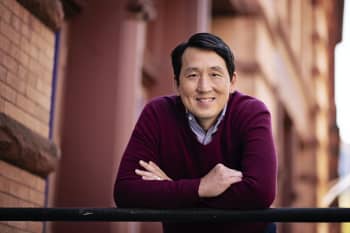
A compass keeps voyagers on their true course. At the National Humanities Center we have never strayed from our mission. Even in the most turbulent times, we use our mission as the guide to keep sure footing on our path to a future where knowledge generated at the Center brings clarity and makes lives better.
The mission and destination—the generation of new knowledge—remain the same, but we innovate our scholarly journey by finding new paths and using new modes of getting from one point to the next. New and innovative research leads to deeper, more nuanced work by NHC Fellows, engaging courses to connect with teachers in K–12 classes, resourceful webinars and podcasts, and stronger partnerships with institutional sponsors, donors, and communities. This is what the NHC does. We support the best scholarship the world has to offer, we share it with the world, and we encourage the world to build on it and use it to better conditions for all.
Our work—our mission—will always be relevant, necessary, and one-of-a-kind. We move forward with the light of knowledge growing and guiding our ever-seeking understanding of the human experience.
Supporting the Center
Generous supporters make our work—and our impact—possible.
Contributors
$25,000+
Anonymous
Barbara Asch and Jonathan Weiss
Elizabeth Birkelund
Ann and Josh Rowland Fund of the Douglas County Community Foundation
Vincent LoVoi
National Endowment for the Humanities
Jane O. Newman* and John H. Smith*
J. Porter and Victoria Durham
Lawrence and Lucy Ricciardi in honor of Robert Newman
Wells Fargo in honor of Jonathan G. Weiss
Raymond J. Wiacek and Nancy E. O’Connell
A. Morris Williams, Jr.
$10,000–$24,999
Jim and Janet Averill
Willo Carey and Peter Benoliel †
Karen and Peter Lawrence
Carl and Betty Pforzheimer
Cara W. Robertson*
Peter J. and Anne L. Rogers, Jr.
Tom Scherer and Georgia Nugent
Elisabeth Schroeder
Julia L. Shear*
$5,000–$9,999
Professor Edna G. Bay*
Dennis and Leesa Campbell
Rachel B. DuPlessis* and Robert S. DuPlessis* in memory of Trevor Burnard
Fidelity Brokerage Services LLC
Pam and Doug Hendrickson
Robert and Vicky Newman
Carol Quillen
Sally and Russell † Robinson
Edwin M. † and Jane Yoder †
$1,000–$4,999
Martin A. Berger*
David Blackbourn
Daniela Bleichmar
Richard M. Burian*
William D. Cohan
Joy Connolly
Carolyn and W. Robert Connor
Anne G. Crane
Margo Drakos
Frances Daly Fergusson
Kate Flint*
David Folkenflik
Catherine Gallagher* and Martin Jay*
Charles Goheen
Elizabeth Goheen
Anna Ragland Hayes
Elizabeth* and Howard Helsinger
Carla Hesse* and Thomas Laqueur*
Michael Ann Holly
Rishi S. Jaitly
William Chester Jordan
Julia A. King*
William E.* † and Jean Anne Leuchtenburg
Richard and Jane Levy
Megan G. Lower
William G. Lycan*
Susan Maynor
Dr. Vincent E. Price
Kellie P. Robertson*
Julie Velásquez Runk*
Daniel Scroop* & Julia Reid in memory of Flora Scroop-Reid
John Sherer
Patricia Meyer Spacks*
Joan* and Philip* Stewart
Gertrude G. Swain
James Van Cleve*
Ben Vinson III*
Michael Witmore
Susan Wolf* and Douglas MacLean
$250–$999
Anonymous
Mia E. Bay*
Matthew Booker* and Aranzazu Lascurain
Heidi N. Camp
Scott E. Casper*
Roger Chickering*
Paul B.* and Margaret C. Courtright
James C. Dobbins*
Mrs. Elizabeth Dowd
The Dowd Foundation
Kathleen DuVal* and Martin Smith
Constantin Fasolt* in memory of Professor John M. Headley
Frances Ferguson*
Fidelity Charitable Gift Fund
Jaroslav T. Folda*
Bryna Goodman*
Christopher Grasso*
Barbara J. Harris* and Stanley Chojnacki*
J. William Harris*
Evelyn Brooks Higginbotham*
Barbara J. Harris* and Stanley Chojnacki*
Jewish Communal Fund
John* and Joy* Kasson
G. Ronald Kastner, Ph.D.
Ellen E. Kaye
Philip S. Khoury
Shepard Krech III* and Sheila ffolliott
Rebecca Lowen
Sarah Maza*
Josiah Ober*
Paul and Lynn Otto*
Sarah Phillips
Jeremy D. Popkin*
Mark Possanza* and Jennifer Kraar
Katherine Preston*
Joseph P. Quinlan
Janice A. Radway*
Mark Richard* and Nancy Bauer
Marilynn Richtarik* and Matt Bolch
Jontyle T. Robinson*
Ellen Ross*
William K. Sawyer
Elaine Scarry*
Larry Silver* and Elizabeth Silver-Schack
W. Scott and Kristen Thomason
Héctor Tobar
Vanguard Charitable
Dorothy C. Wong*
Pauline R. Yu
Lawrence Zbikowski* and Victoria L. Long
Gifts in Kind
Daniela Bleichmar
Robert P. George
William Chester Jordan
Ellen Kaye
Robert and Vicky Newman
Dr. Vincent E. Price
Tom Scherer and Georgia Nugent
Cornel West
* NHC Fellow
† Deceased
Corporate and Foundation Partners
Burroughs Wellcome Fund
The Duke Endowment
Geiss Hsu Foundation
Google
Hall Foundation
William R. Kenan Jr. Charitable Trust
United Negro College Fund
Institutional Sponsors
President’s Circle
Duke University
Harvard University
North Carolina State University
Princeton University
Stony Brook University
University of North Carolina at Chapel Hill
University of North Carolina at Greensboro
University of Notre Dame
University of Texas at Austin
Yale University
Executive Circle
Columbia University in the City of New York
Massachusetts Institute of Technology
University of Pennsylvania
University of Utah
Washington University in St. Louis
Leadership Circle
Appalachian State University
Arizona State University, College of Liberal Arts and Sciences
Ashoka University
Auburn University
Augusta University
Bowdoin College
Brandeis University School of Arts & Sciences
Brigham Young University
Bryn Mawr College
Case Western Reserve University
Colgate University
Colorado State University Joe Blake Center for Engaged Humanities
Davidson College
Emory College of Arts and Sciences
Furman University
George Mason University, College of Humanities and Social Sciences
Hamilton College
Indiana University College of Arts and Sciences
Ithaca College
Johns Hopkins University, Krieger School of Arts and Sciences
Johnson C. Smith University
Lehigh University
North Carolina Central University
Ohio Northern University
Penn State Humanities Institute, The Pennsylvania State University
Pomona College
Prairie View A&M University
Rice University School of Humanities
Rochester Institute of Technology
St. Olaf College
Stanford University
Stellenbosch Institute for Advanced Study
Swarthmore College
Syracuse University
Texas A&M University College of Arts and Sciences
Texas Tech University College of Arts and Sciences
The College of Liberal Arts at the University of Texas at Arlington
The College of Literature, Science, and the Arts at the University of Michigan, Ann Arbor
The Ohio State University
The University of Alabama, College of Arts and Sciences
The University of Chicago
The University of Kansas, Hall Center for the Humanities
The University of Oklahoma Arts and Humanities Forum
The University of Texas at San Antonio
Tulane University
Union College
University at Buffalo, The State University of New York
University of California, Los Angeles
University of California, Riverside
University of California, Santa Cruz, Humanities Division
University of Cincinnati
University of Delaware
University of Florida Center for the Humanities and the Public Sphere
University of Georgia
University of Iowa
University of Kentucky
University of Maryland
University of Memphis, Marcus W. Orr Center for the Humanities
University of Missouri
University of North Carolina at Charlotte College of Humanities & Earth and Social Sciences
University of North Carolina Wilmington
University of Rochester
University of South Carolina
University of Tennessee, Knoxville Denbo Center for Humanities & the Arts
University of Tulsa
University of Virginia College and Graduate School of Arts and Sciences
Vanderbilt University College of Arts and Sciences
Virginia Tech
Wake Forest University
Humanities Circle
American Council of Learned Societies
Bard College
Bucknell University
Dartmouth College, Leslie Center for the Humanities
Elon University
Florida A&M University
Hampden-Sydney College
Howard University
Macalester College
Reed College
Smith College
Southwestern University
Trinity University
University of Missouri–Kansas City
Wesleyan University
William Jewell College
Sister Sponsors
SUNY Old Westbury (nominated by Stony Brook University)
The Sawyer Society
Professor Edna G. Bay*
Peter A. Benoliel †
Carolyn and W. Robert Connor
The Hon. † and Mrs. † R.F. Goheen
Merril M. Halpern
Robert Hollander †
Mr. John B. Hurford †
Jenann Ismael*
G. Ronald Kastner, Ph.D.
Linda Kauffman*
Ellen E. Kaye
John N. King*
Shepard Krech III*
Hope Lacy †
Richard D. Levy
Nancy Lewis †
Sheila M. Lund †
Louise McReynolds*
Mr. † and Mrs. † John G. Medlin, Jr.
William M. Moore, Jr.
John E. Sawyer †
David E. Shi*
Timothy D. Taylor
Rosaleen M. Walsh †
Seth L. Warner †
Clay C. Whitehead, M.D. †
Marjorie C. Woods*
Financial Trends
Since the market correction in 2022, the Center’s financial standing has remained solid, and the endowment has rebounded to reach $93.2 million as of the end of fiscal year 2025. The 22% growth in asset value, coupled with steady growth in donor support and fiscal discipline, have helped ensure the Center’s continued independence and the success of its mission.
Endowment Market Value
Support and Revenue
Expenses
in US dollar
 Built with Shorthand